If you're in the market for a new website, navigating the dramatically varying prices of web design can be difficult and time-consuming. You may be asking yourself, why does one firm charge $500, and another charges $10,000? Here’s the honest breakdown of what website design costs in Edmonton in 2026 and why prices vary so much.
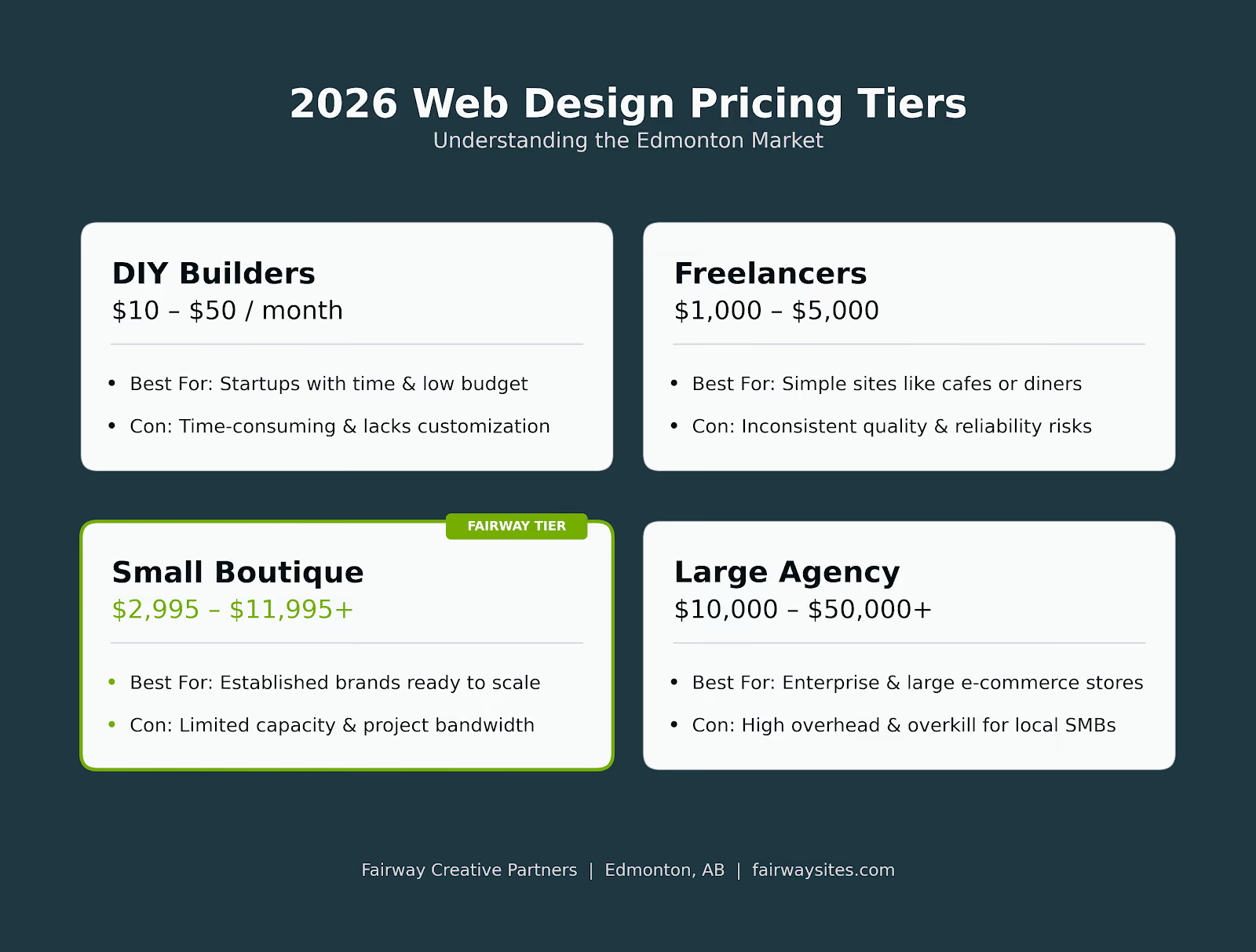
There are four main paths to getting a website built, and the price gap between them comes down to two things: who's doing the actual work, and how much of the site is custom versus pre-made. Here's what each tier gets you.
These are drag-and-drop platforms where you build and edit the site yourself using pre-made templates. Little to no coding or design experience is required.
Cost:
$10 to $50 per month
Who this is for:
We recommend this for startups and new business owners who have time on their hands and a willingness to learn about the DIY builder. A big custom website won't make much difference if you don't have the traffic to take advantage of yet.
Watch out for:
Some DIY builders require a higher price to remove their branding. As your business grows, you'll likely need more custom options that the builder platform doesn't offer. If you're still on the fence about taking this on yourself, read our comparison on designing your own website vs. hiring a web design agency to see which path fits your current goals.
Freelance Web Designer
A freelance web designer is typically one person handling the entire build, design and development both, often part-time or juggling several clients at once.
Cost:
$1,000 to $5,000 depending on experience
Who this is for:
A good fit for businesses where the website supports the business rather than drives it. A cafe or restaurant survives on foot traffic, reviews, and repeat customers, not search rankings, so a simpler site at a lower price point does the job without paying for capability you won't use. Same logic applies to a new business still figuring out its offering: a freelancer gets you online fast while you're not yet sure what the site needs to do long-term, without the time investment DIY builders require.
Watch out for:
At this price range you're most likely getting a template website. You face the risk of reliability from your designer (will they be around to maintain the site in 6 months?). Finding a freelancer with a high quality of work can be a time-consuming process.
Small Boutique Agency
A small boutique agency is a compact, often under-10-person team that handles design and development in-house rather than outsourcing pieces of the work, giving you direct contact with the people actually building your site.
Cost:
$2,995 to $11,995+ depending on project size
Who this is for:
A good fit for small-to-medium established businesses that want custom work without paying for the overhead a large agency carries. A smaller team typically means less distance between what you ask for and who's building it, no account manager relaying messages to a design team you never talk to.
Pricing tends to reflect project cost more directly too, since a boutique agency isn't also funding a downtown office, a sales department, or multiple layers of project management the way a larger shop does.
Watch out for:
A small team means limited bandwidth. A boutique agency can only take on so many projects at once, so availability may not line up with your timeline, and a good one will tell you upfront if they're not the right fit rather than stretching themselves thin to take the work anyway.
Scale is the other limit. A project with dozens of pages, complex functionality, or a tight enterprise deadline may need more hands than a small team can put on it without the timeline stretching out.
Large Agency
A large agency is a bigger operation, often 20 or more staff, with dedicated roles split across project management, design, development, and sales rather than one person or a small team wearing every hat.
Cost:
$10,000 to $50,000+ depending on project size
Who this is for:
This is the right choice for projects with significantly more complex requirements: custom back-end functionality, membership logins and user databases, multi-language builds, or large-scale e-commerce with complex inventory. A bigger team means multiple designers and developers can work on different parts of the project at once, which matters when the project itself needs that kind of parallel effort to hit a reasonable timeline.
Watch out for:
A large agency's price reflects real infrastructure: project managers, sales teams, account managers, and office space, plus more layers of staff between you and the person actually writing code. If your project matches the complexity above, that structure earns its cost. For most small-to-medium businesses though, you're paying for infrastructure the project doesn't need, and most large agencies also carry a higher minimum project cost regardless of scope.
Communication is the other tradeoff, and it's often the bigger one in practice. With more people between you and the actual build, requests can get diluted passing through an account manager before they reach a developer, and small details get lost in translation. Managing many clients at once also means the relationship can feel less personal, more like a ticket in a queue than a working partnership.
Is a Professional Website Worth It?
The value of a professional website depends on your business and what you want it to do. If you're just looking to have something up to check a box, and you're not relying on customers finding you online, a cheaper solution can get the job done.
Some businesses do fine without a website, running purely on social media or word of mouth. But more people search online for a business before choosing one every year, and a social media page carries real risk: your account can be banned, buried by an algorithm change, or simply outranked by a competitor. A website is the one online asset you actually own. It's worth having even if social media is doing most of the heavy lifting today.
For a high-ticket business, like construction or B2B services, this is an easy yes: one extra lead a month, sometimes even one job, covers the cost many times over. For a high-volume, low-ticket business, like a restaurant or cafe, the case is less clear-cut. A lot of what actually brings those customers in, reviews, social media, foot traffic, location, has little to do with the website itself, so a mediocre site can still get by fine. That doesn't mean it's not worth doing well, just that it's a harder sell to justify on numbers alone.
If your goal is more leads, a cheap website often lacks optimization geared towards bookings and calls. Saving money upfront can cost you more in the long run.
Here's what that looks like in practice for a service business where an average job is worth $3,000. Feel free to plug in your own numbers:
A five-page site for a local plumber involves less labor than a thirty-page site for a plumber with dozens of service area pages across Alberta. As a site grows, designers can often reuse elements across different pages. While adding more pages is still more work, the "cost per page" often goes down as the project size goes up.
2. Template vs Custom Website
A template is like a pre-built house where you only change the paint and furniture. It’s faster and cheaper to build but can come with limitations of being restricted in the theme you chose. A downside with templates is that your brand doesn't stand out, and you look like everyone else who chose the same theme.
A custom website is built around your brand and aligns with your specific goals. Some organizations want to stand out visually, while others need a polished, professional presence that reflects their real-world reputation.
3. Number of Unique Pages
Unique pages simply mean that certain pages on your website require different design elements. You wouldn't expect your team members' page to look like your pricing page; they require different layouts for the content.
The more “unique pages" needed to be designed, the more hours are required. 10 blog posts that use the same structure for each post are much faster to build than 10 unique pages.
4. Advanced Functionality
Filtering blog posts, advanced search, or user logins all add time and complexity to a build.
5. Plugins and Integrations
Not all plugins are equal. Some are as easy as attaching a link to a button or dropping in a code script. Some plugins will require more technical setup and may even require additional third-party software which will increase the hours and price of a project.
6. Timeline
Projects with a shorter timeline typically cost more because they require an agency to shift resources and prioritize your project over others.
Not all agencies are able to accommodate your timeline, or it may not be possible based on your request.
Assuming an equal number of pages, a custom website will take longer than a website built with a DIY builder or template.
7. Who Builds the Website
The biggest cost driver is the team behind the screen.
Large agencies have project managers, sales teams, and office space. You're paying for that infrastructure.
Some agencies/freelancers quote lower because they outsource the project to overseas developers. This can lead to communication gaps and lower quality work.
Finding the right partner comes down to preparation. Before you start reaching out for quotes, check out our checklist of the most important things to do before hiring a web designer so you know what questions to ask and what assets to have ready.
Website Pricing Red Flags
If you're talking to a designer or agency, be careful of these red flags:
"We guarantee you'll be #1 on Google": Nobody can guarantee rankings. SEO is a long-term game of competition, not a switch you flip.
Extremely low prices for "custom" work: A $1,000 quote for a 15-page custom site sounds like a deal but at that price, the designer is likely using a template or outsourcing the project. Quality custom work takes time.
Quotes provided without a discovery process: Pages, features, and your goals for the website all impact the final cost. No professional agency can provide an accurate estimate without first understanding your specific project.
Vague timelines: If they can't tell you what happens in week 3 or week 6, the project will likely drag on for months.
Website ownership: You should always own your website. Even if your agency is managing the website for you, you should have the option to switch to another agency or have account access if you decide to leave.
Trust Your Gut Feel: Some web designers hide behind technical jargon to take advantage of clients. If you feel a designer is selling a fantasy or can't explain their process clearly, listen to your gut.
Hidden Costs of a Website
Hosting & Maintenance Fees
Cost: $25 to $250 per month
Details: Typical hosting covers keeping the site online, SSL certificates, bug fixes, backups, and in some cases a set of monthly design hours for small updates and changes.
Domain Fees
Cost: $20 to $50 per year for your .ca or .com address
Details: We recommend all businesses buy the domain themselves, so you retain full ownership and don't get up-charged from an agency buying it on your behalf.
Copywriting & Content
Cost: $0 to $1,500
Details: Most website quotes assume you're providing the content. That works fine if you have the time and feel confident writing about your own business. Many agencies will tweak your provided content to fit with the page design, or if SEO is a goal, they may change your content to better rank your business keywords. Small tweaks to fit design don’t typically impact cost, but if you're requiring the agency to create text copy for your website or make large edits for ranking purposes, that will lead to an additional charge.
Photography
Cost: $0 to $2,000
Details: If you already have high-quality photos, that's one less cost. Other free to cheap options include stock photography. Stock photos can be fine for placeholders or the short term but real photos of your team, your office/shop, or your finished work build more trust with customers. Visitors can tell the difference. If you don't have photos, then a professional photographer is another option and will come at an additional cost.
Optional Marketing Add-ons
Cost: $500-$2000 per service depending on your business needs.
Details: Some agencies offer additional monthly services like SEO, PPC advertising, email marketing, and social media management. These typically aren't included in your initial website price and carry their own recurring costs. Beware of any agency or freelancer that tries to lock you into a long-term contract for marketing services that you don't need. Agencies can offer all-in-one pricing if you're looking for a variety of marketing services along with your website but make sure to ask what all is included. Not all agencies offer every digital marketing service.
Is a Website Redesign Priced Any Different?
Typically, redesigns are priced the same way as a new build. The scope, number of pages, and complexity drive the cost, not whether the site existed before.
If you're going to use most of the same text and photos then that can save you from having to pay for copyrighting or photography.
One important consideration with a redesign is SEO.
If your current site has any Google ranking worth preserving, a proper redesign should account for that through redirect mapping and maintaining your existing URL structure when possible. The more pages your current site ranks for, and you want to maintain the more planning and time goes into your new redesign.
Questions About Edmonton Web Design Costs
How long does a typical project take?
In Edmonton, most custom websites take 6 to 10 weeks to launch.
Template and DIY websites will typically have a much faster turnaround time (1-4 weeks).
Do I own my website when it's done?
You should, always. Plenty of agencies offer managed hosting under their own account, which is often the easier setup day-to-day, and that's fine. What matters is whether you have the option to take full control whenever you want: get the login, move to your own account, or switch to a different agency entirely. Watch out for agencies that make that transfer difficult or costly. That's a sign they're relying on lock-in to keep you, not on doing good work.
Do I really need to pay for monthly maintenance & hosting?
At a minimum, you must pay for hosting. A website is a collection of files that needs a server to stay live on the internet. Hosting typically ranges for $10-$40/mth depending on your platform and plan.
Most agencies offer monthly support plans and cover hosting (if not paying separately), security patches, bug fixes, and backups.
How many pages does a small business website actually need?
Most standard service businesses find success starting with a Home page, About, Services, Pricing, Contact, and a Gallery/Projects Page. As your business grows, usually your website grows alongside it.
The type and number of pages is often niche specific. If your competitors all have pricing pages, you probably should too. A home renovations company should probably showcase reviews and recent projects because these are factors in the customer's decision to work with you.
Will a "cheap" website hurt my Google rankings?
Not necessarily. Google doesn't know what you paid for your site. A budget website can rank well if it includes unique, helpful content, mobile responsiveness, and fast loading speeds.
When cheaper sites do rank worse, it's usually one of two things. DIY builders often carry bloated code and excessive plugins that slow the site down, and speed affects rankings directly. The other is more common than people expect: whoever built the site didn't know how to optimize the technical basics, like meta titles, meta descriptions, and page schema. This shows up constantly, a homepage with a title tag that just says the business name, or literally "Home," with no keywords at all. That's an easy fix, but it's also an easy thing to miss if you don't know it's there to fix.
Both problems are avoidable. A budget build that gets these right can still rank well.
Wrapping Things Up
Web design in Edmonton pricing comes down to scope, customization, and who's building it. At Fairway, that sweet spot for a high-performing custom site runs $2,995 to $11,995, see our full pricing breakdown for package details. Ready to stop settling for a template and start standing out? Book a free consultation or request a free SEO audit today.
No items found.
Are You Getting The Most Out Of Your Website?
Talk to our web design experts at Fairway today and receive a complimentary website audit, free of charge.